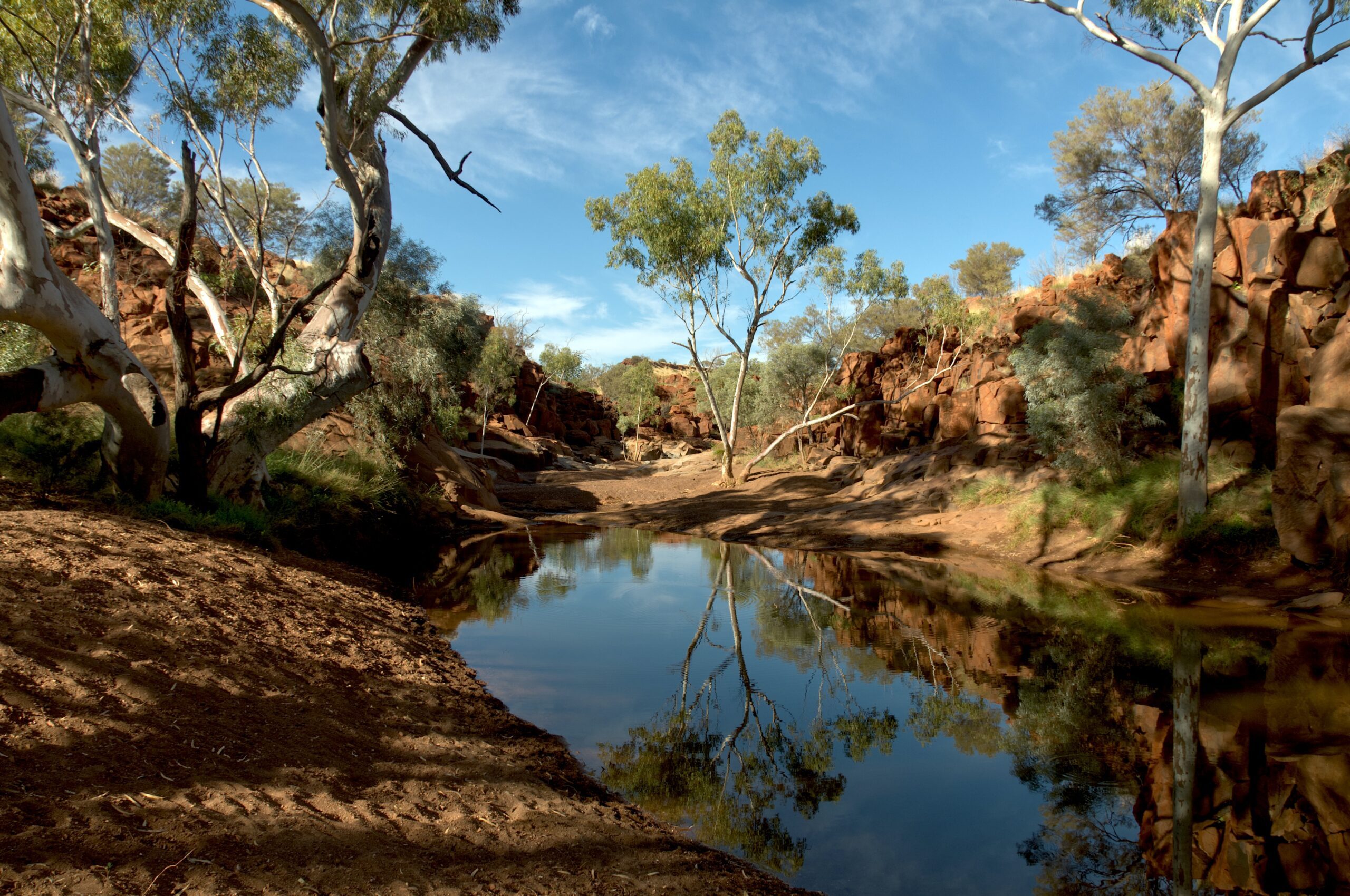
River crossings rank among Australia’s most exciting 4WD challenges, offering the perfect blend of adventure and skill testing across our diverse waterways. One seasoned driver learned this lesson the expensive way when what appeared to be a simple wheel deep crossing turned into a $12,000 Range Rover repair bill.
These water obstacles can provide some of the most rewarding moments in Australian off roading. Unfortunately, without proper preparation and technique, that thrilling creek crossing can quickly become an expensive mistake. The key lies in understanding three critical factors before you commit: water depth, current strength, and what hazards lurk beneath the surface.
Your standard 4WD has specific wading depth limits, and exceeding them typically results in serious engine damage. The tried and true assessment method remains walking the crossing first. Experienced off roaders will tell you that if the water reaches your knees during this walk through, it’s generally too deep for most standard 4x4s.
Whether you’re planning a weekend trip to the High Country or tackling remote Cape York tracks, mastering safe river crossing techniques represents an essential skill for any Australian 4WD driver. This guide breaks down each crucial step for beginners, covering everything from initial water assessment through to post-crossing vehicle checks.
Step 1: Assess the Water Before You Commit
Proper water assessment separates successful crossings from expensive recovery operations across Australia’s diverse river systems. Smart off roaders gather crucial information before committing their vehicle to any water obstacle, and this initial assessment often determines whether you’ll drive out the other side or need a tow truck.
Check Water Depth and Current Strength
Water depth remains the most critical factor in any crossing decision. That innocent looking creek can fool even experienced drivers, a standard 2.5 ton 4WD becomes unstable in just 45cm of water, which is less than knee deep. What appears shallow from the bank often conceals deeper channels that can spell trouble for your engine bay.
Current strength deserves equal attention. Toss a stick into the flow and watch its movement. If it travels faster than walking pace, the current may overpower your vehicle’s traction. Fast flowing water packs serious punch, capable of floating a standard one ton vehicle in just 15cm of water. The forces involved can easily overwhelm even capable 4WDs if you misjudge the conditions.
Walk the Crossing First
Walking your intended path provides the most reliable assessment method for any unfamiliar water crossing. This technique lets you feel the riverbed conditions first hand while spotting potential hazards that aren’t visible from the surface. The proper approach involves walking both wheel paths. Follow your left wheels’ intended route one way, then return along your right wheels’ path.
Here’s the golden rule. If water reaches your knees during your assessment walk, it’s typically too deep for most standard 4x4s. Additionally, if you struggle to maintain balance while walking the crossing, your vehicle will face similar stability challenges. Trust your instincts during this assessment phase.
Spot Hidden Hazards Below
The riverbed holds plenty of surprises that can trap the unwary. Use a sturdy stick or pole to probe deeper sections, checking for sudden drop offs or holes that could swallow your vehicle. Feel carefully for submerged obstacles like rocks, logs, or washouts that might catch your chassis or puncture your oil pan.
Riverbed composition makes a significant difference to traction. Packed sand or gravel provides reliable grip, while loose rocks, deep mud, or slimy surfaces can leave you spinning wheels uselessly. Polarised sunglasses help cut through surface glare, making underwater hazards easier to spot.
Steer Clear of Floodwaters and Salt
Floodwaters present entirely different dangers compared to normal creek crossings. These raging torrents vary dramatically in depth, carry dangerous debris, and frequently wash away road surfaces underneath. The debris alone, fallen trees, fence posts, even cars can destroy your vehicle in seconds.
Never attempt floodwater crossings under any circumstances. They’re deeper than they appear, contaminated with chemicals and sewage, and often conceal missing sections of road. More than half of Australia’s flood related deaths result from the decision to drive through floodwaters. It’s simply not worth the risk.
Saltwater crossings deserve similar caution due to accelerated corrosion and electrical damage. Beach driving near tidal areas requires extra vigilance for changing water levels and unstable, soft sand that can bog vehicles instantly.
Step 2: Prepare Your 4WD for Water
Vehicle preparation separates successful river crossings from expensive recoveries. Once you’ve assessed the water and decided to proceed, proper 4WD setup becomes your best insurance against problems in Australia’s challenging river environments.
Know your vehicle’s wading depth
Every 4WD comes with manufacturer specified maximum wading depths, and these limits should never be exceeded. The Ford Everest boasts an impressive 800mm wading capacity, while some vehicles may be limited to just 500mm. Land Rover’s Discovery 5 claims an even more impressive 900mm maximum wading depth. These specifications depend on critical component locations including air intake height, alternator positioning, and fuse box placement.
Fit a snorkel or water blind if needed
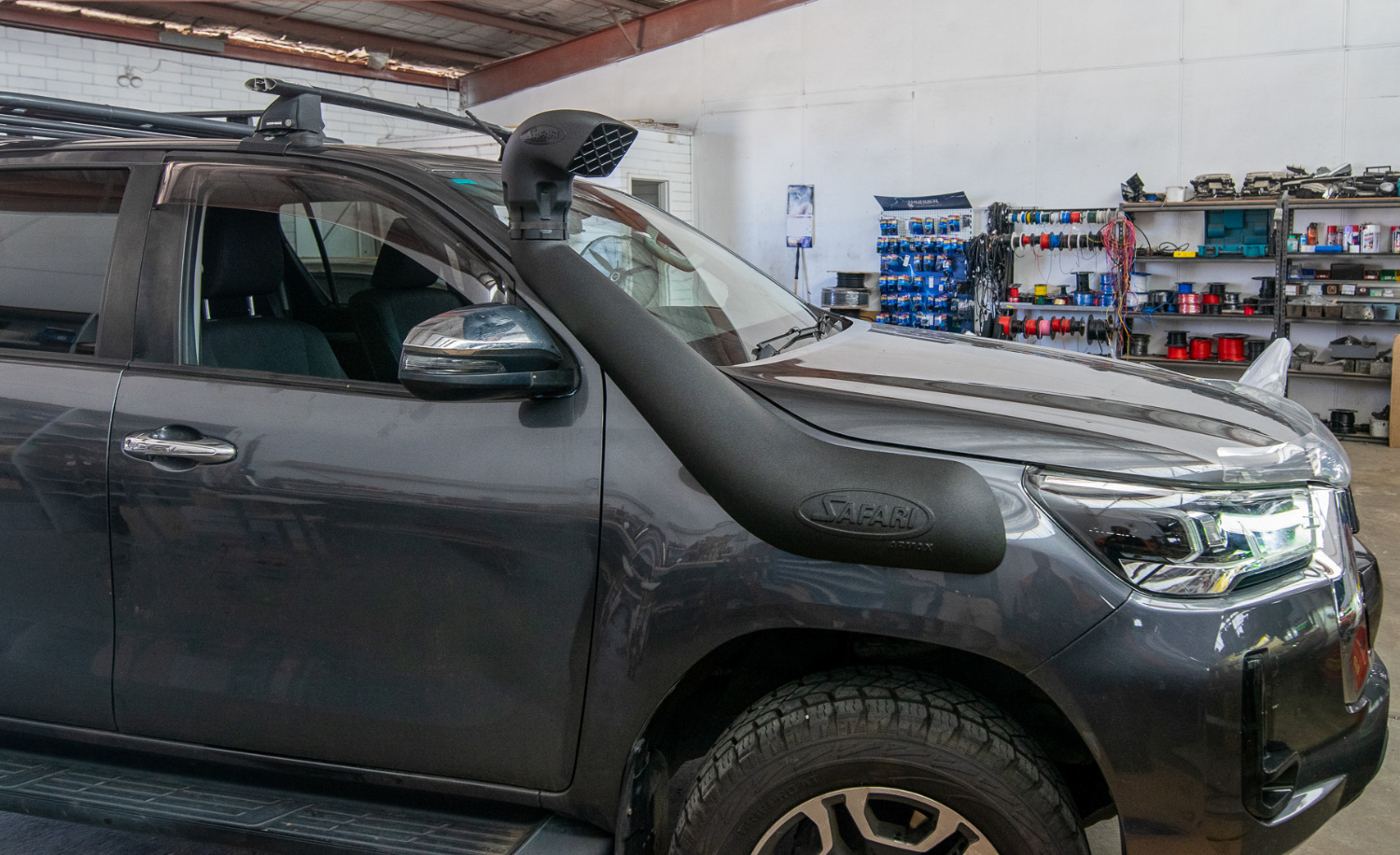
A quality snorkel ranks as one of the best modifications for serious river crossing, raising your engine’s air intake to roof height. This upgrade prevents water ingestion that causes catastrophic engine damage through hydraulic lock.
Water crossing blinds (sometimes called bras) offer a cheaper alternative, diverting water around your vehicle’s front rather than letting it flood the engine bay. These protective covers range from simple secured tarpaulins to purpose built aftermarket designs costing under $230. Remove them promptly after crossing to prevent engine overheating.
Seal electrical components and check diff breathers
Differential breathers need extending to prevent water ingress during crossings. Hot differentials cool rapidly in water, creating vacuum pressure that draws water through seals. Extended breather kits route these tubes high into the engine bay, allowing components to breathe without ingesting water.
Protect electrical components by applying water dispersant spray to connectors, alternators and ignition components. This creates a protective barrier against moisture that could cause short circuits or sensor failures.
Lower tire pressure for better traction
Drop your tire pressure to around 15-20 PSI before attempting river crossings. Lower pressures allow tires to spread out, providing better grip on potentially slippery riverbeds. For muddy or sandy bottoms, aim closer to 15 PSI; for rocky, slippery surfaces, approximately 20 PSI offers better performance.
Attach recovery gear before entering
Connect your recovery equipment before entering the water. Tow ropes, snatch straps, and soft shackles should be attached to rated recovery points. This preparation eliminates the need to attach recovery gear while your vehicle sits submerged, which can be nearly impossible. Leave electric windows down on the downstream side for emergency exit if needed.
Step 3: Execute the Crossing Safely
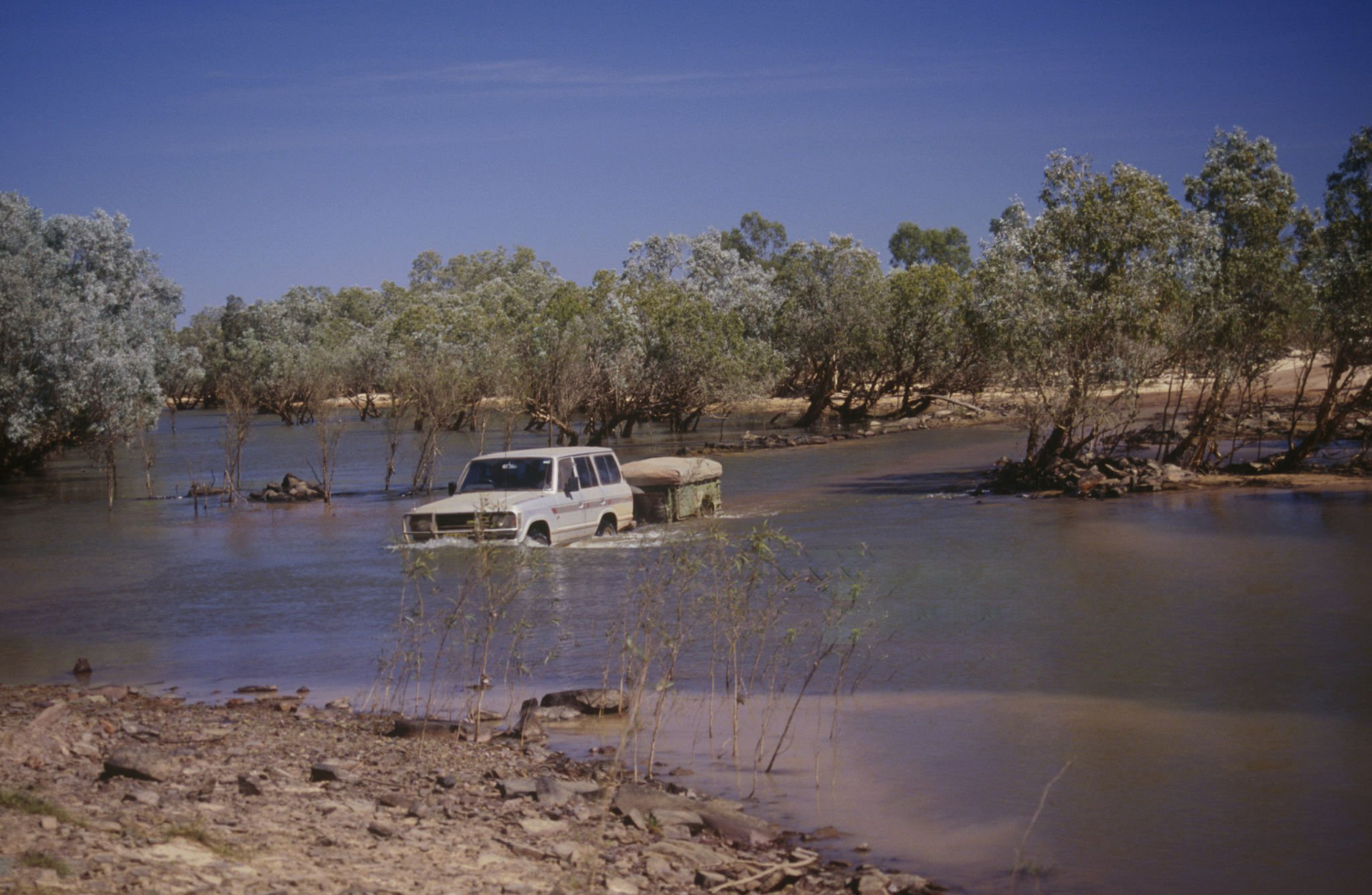
Once you’ve assessed conditions and prepared your vehicle, proper driving technique makes the difference between a successful crossing and a costly mistake. These fundamental techniques ensure your engine stays protected while maintaining control through Australia’s challenging water crossings.
Select Low Range Second Gear
Engage low range before entering the water. This gives you the torque multiplication and precise speed control essential for safe crossings. Second gear low range works best for most situations, providing enough power to maintain momentum without creating dangerous speed that could flood your engine bay.
First gear low range suits shallow crossings with rocky bottoms where you need absolute control over wheel placement. Modern vehicles with 8 speed automatics might find second gear too aggressive, so experiment with your particular setup during practice runs in safe conditions.
The goal is maintaining steady progress without wheel spin or sudden power surges that could break traction on slippery riverbeds.
Create and Maintain Your Bow Wave
Keep your speed steady at walking pace, around 5-7 km/h once you’re in the water. This creates a protective bow wave that pushes water ahead of your vehicle, forming an air pocket around your engine bay. Too fast and water will surge over your bonnet; too slow and you’ll lose that crucial protection.
Watch your engine RPMs and keep them between 1,500-2,000 throughout the crossing. This maintains sufficient exhaust pressure to prevent water backing up through your exhaust system while avoiding the engine damage that comes from excessive revving.
The bow wave technique has saved countless vehicles from water ingestion, but it only works when you maintain that consistent, moderate pace.
Never Change Gears Mid Crossing
Select your gear before entering and stick with it until you’re safely across. Manual transmissions are particularly vulnerable – water between the clutch disc and flywheel will cause immediate problems that could leave you stranded in the middle of the crossing.
Automatic transmissions handle water better, but sudden gear changes create power surges that can break your protective bow wave. If you’re driving an auto, select Drive or manually choose second gear, then focus entirely on steady throttle control.
Any acceleration or deceleration mid crossing disrupts the water flow around your vehicle and compromises your engine protection.
Keep Emergency Exits Ready
Roll down all windows before entering the water. This simple step could save lives if something goes wrong. Power windows won’t function if your electrical system fails, potentially trapping occupants inside a flooded vehicle.
Keep doors unlocked throughout the crossing, even though opening them against current flow remains nearly impossible. These precautions provide the best chance of emergency exit should your crossing go wrong.
Most importantly, brief all passengers on emergency procedures before attempting any water crossing, especially on remote Australian tracks where help could be hours away.
Post Crossing Safety Checks
Successfully crossing that river represents just the beginning. What you do immediately after determines whether your adventure continues smoothly or turns into an expensive lesson. These final checks often make the difference between a great day out and a dangerous situation down the track.
Dry Your Brakes Immediately
Wet brakes pose a serious safety risk after any water crossing. Hot brake components meeting cool water creates steam that dramatically reduces braking effectiveness. Pull over briefly on the far bank to let excess water drain from your brake components.
Once you’re moving again, gently apply your brakes for about 10 seconds while driving at low speed. This light pressure creates enough friction to evaporate remaining moisture without overheating your brake pads or discs. Skip this step and you might find yourself with severely reduced braking power right when you need it most.
Too many drivers make the mistake of immediately continuing their journey without testing brake response. Find a safe spot away from the crossing and pump your brakes several times until they feel normal again. Listen carefully for unusual sounds that might indicate water has penetrated brake components or other mechanical systems.
Check your brakes properly once you’re clear of the crossing. While you don’t need an exhaustive inspection right away, confirming normal operation is essential. Any strange brake behavior warrants a thorough check before you tackle the rest of your Australian off road adventure.
Ready to conquer those Australian river crossings? Contact Total 4×4 today for expert advice and equipment! Let’s get you safely across.
Key Takeaways
Master safe 4WD river crossings in Australia with these essential techniques that could save you thousands in repair costs and keep you safe on remote adventures.
- Always walk the crossing first – If water reaches your knees while walking, it’s too deep for most standard 4x4s
- Prepare your vehicle properly – Lower tire pressure to 15-20 PSI, seal electrical components, and attach recovery gear before entering
- Use correct driving technique – Select low-range second gear, maintain steady 5-7 km/h speed to create a protective bow wave
- Never attempt floodwater crossings – More than half of flood-related deaths in Australia result from driving through floodwaters
- Dry your brakes immediately after – Gently tap brakes for 10 seconds while driving slowly to restore full braking effectiveness
Remember that a standard 2.5 ton 4WD can become unstable in just 45cm of water, and proper preparation combined with the right technique makes the difference between adventure and disaster in Australia’s challenging river environments.
FAQs
Q1. What is the safest way to assess a river crossing before driving through?
The safest method is to walk the crossing first if it’s safe to do so. This allows you to feel the riverbed condition, check water depth, and identify potential hazards. If the water reaches your knees while walking, it’s generally too deep for most standard 4×4 vehicles.
Q2. How should I prepare my 4WD vehicle for a water crossing?
Prepare your 4WD by knowing your vehicle’s wading depth, fitting a snorkel or water blind if needed, sealing electrical components, checking differential breathers, lowering tire pressure to 15-20 PSI, and attaching recovery gear before entering the water.
Q3. What’s the correct driving technique for a river crossing?
Select low-range second gear before entering, maintain a steady walking pace of 5-7 km/h to create a protective bow wave, avoid changing gears mid-crossing, and keep windows down for emergency exit if needed.
Q4. Why should I never attempt to cross floodwaters?
Floodwaters are extremely dangerous as they can be deeper than they appear, contain harmful debris, and may conceal washed-away sections of road. More than half of unintentional flood-related deaths in Australia result from driving through floodwaters.
Q5. What should I do immediately after completing a water crossing?
After crossing, pause briefly to allow excess water to drain. Then, dry your brakes by gently applying them for about 10 seconds while driving slowly. Check for any unusual sounds or abnormal brake behaviour, which may indicate water ingress requiring further inspection.