
Australia’s terrain can be tough and pulls no punches. From the red sand dunes of the Simpson Desert to muddy forest tracks in Queensland and the coastal beaches of Western Australia, the country throws up challenges that demand proper preparation. The wrong gear doesn’t just make for an uncomfortable trip, it can leave you stranded hundreds of kilometres from help. The right 4WD accessories, on the other hand, keep you moving, safe, and well fed whether you’re out for a weekend getaway or a serious Outback expedition.
Whether you’re brand new to off road driving or a seasoned adventurer looking to fill gaps in your setup, having quality gear on board separates those who push on confidently from those who turn back at the first sign of trouble. From recovery equipment and communication systems through to camping accessories that make remote living genuinely comfortable, these ten essentials cover everything your vehicle needs to handle what Australia dishes out.
1. Recovery Tracks for Sand and Mud
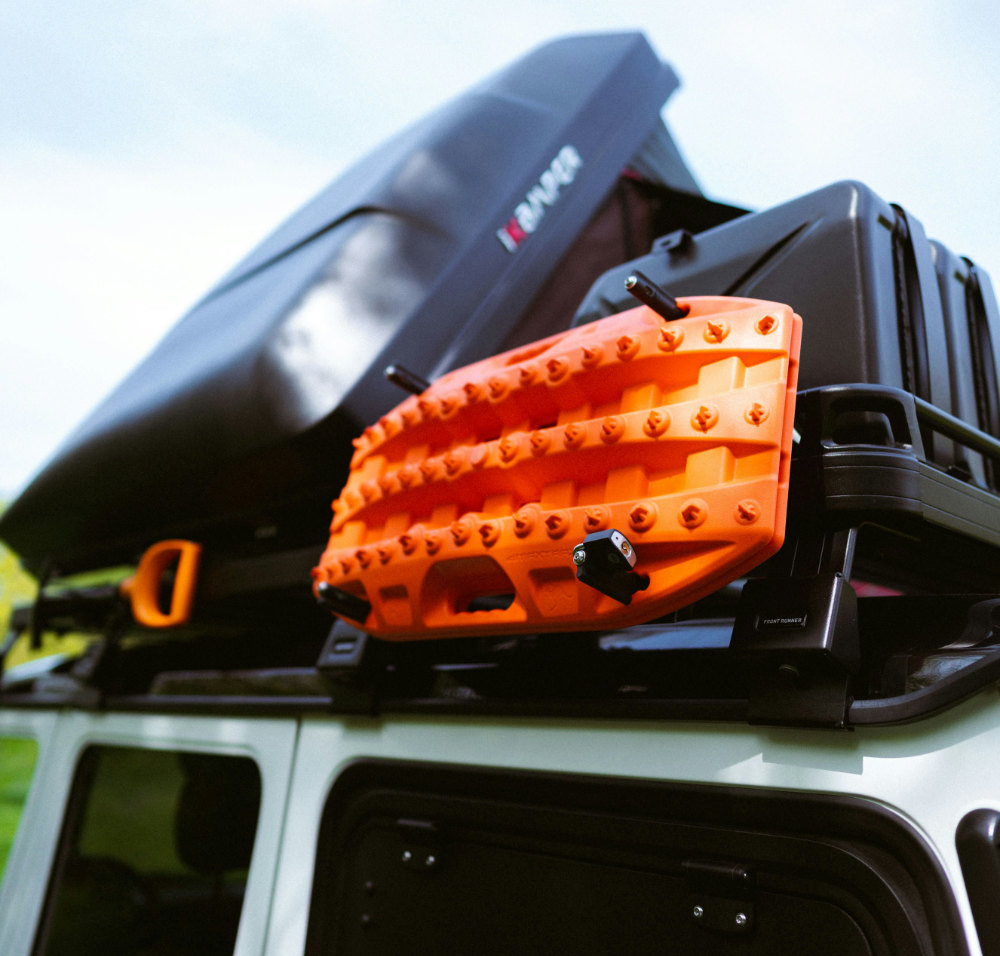
What Recovery Tracks Are
Recovery tracks are purpose built boards featuring aggressive teeth and cleats that grip under vehicle wheels when traction disappears. Made from tough materials like UV resistant polyolefin or cast rubber compounds, these boards are engineered to handle high flex, heavy loads, and serious impact. The cleats underneath bite into the ground surface, while the teeth on top grip into tires for maximum purchase.
Each board typically measures between 800mm and 1400mm long and 260mm to 330mm wide, with weights ranging from 3kg to 16.4kg depending on the construction material. They deliver three clear benefits when a vehicle gets stuck, superior traction compared to wet rock, mud, or snow, flotation that stops vehicles sinking deeper into soft surfaces and clearance by raising tires and the vehicle over obstacles.
Why Australian Adventurers Need Them
Getting stuck in Australia can mean being well and truly on your own. Recovery tracks work without moving parts, suit any vehicle, and are easy to carry. With four tracks, a shovel, some time, and a tire pressure gauge, you can extract a vehicle from virtually any sand situation. They’re particularly valuable when a winch isn’t an option or external help is nowhere near.
Two boards placed under the stuck tires will handle most situations well. Larger vehicles or trickier conditions benefit from four tracks, and those towing trailers may find six necessary. Recovery tracks work alongside other recovery gear rather than replacing them. They’re a simple, reliable first line of self recovery that reduces the strain on winches and snatch straps.
Usage Tips for Maximum Traction
Positioning matters more than most people expect. Dig underneath the tire and jam the track’s tip low and under the wheel, angling it between 15 and 45 degrees from the ground. On sand, clear any material touching the underbody first, then ease forward in first gear low range until the vehicle reaches the tracks. Drop tire pressures to 15-20 PSI after positioning the boards, allowing the tires to expand onto them properly.
Mud recovery follows a similar approach, though you’ll often need to jack the wheels to slide tracks underneath. Cross axled situations call for placing tracks under the wheels carrying the least weight, and deeper bogs may require stacking or building tracks up. Attaching a strap to the track ends makes retrieval much easier after the vehicle drives free, saving considerable digging effort. Avoid wheel spin at all costs as excessive acceleration tears up both the tracks and the tires while making the situation worse.
2. Portable Air Compressor for Tire Management
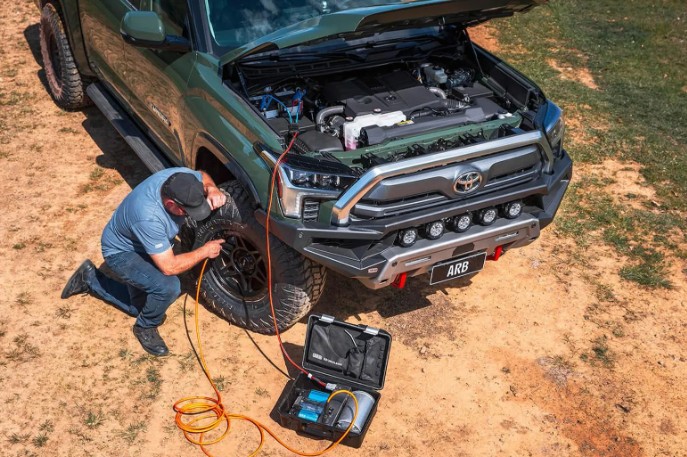
What a Portable Air Compressor Does
A portable air compressor may be a 12V model that connects directly to your vehicle battery using alligator clips or a cordless, battery powered unit designed for quick, convenient top ups. Both types can inflate tires back to road pressure after off road driving at reduced PSI, although battery powered compressors are best chosen with enough battery capacity to service all four tires and a 12V backup or spare battery for remote trips. Most capable units will bring an average 4WD tire from 15 to 35 PSI in around two to three minutes, depending on tire size and compressor strength. They’re not single purpose tools either. Beyond tire inflation, suitable models can top up air tanks, inflate camping mattresses, and, where their output supports it, power air tools or operate air locking differentials.
The key spec to look for is LPM, or litres per minute. Higher LPM means faster inflation and better capability when dealing with large 4WD tires. For serious off road use, look for at least 150LPM output. High flow models like the Tuff Terrain V4, rated at over 400 LPM, can inflate a 35 inch tire from 10 PSI to 40 PSI in just over two minutes. Which matters a lot when you’ve got four big tires to pump up at the end of a long track.
Why Tire Pressure Matters Off Road
Running the right tire pressure for the terrain makes a significant difference to how your vehicle performs. Lower pressures increase the tread footprint length, allowing tires to conform to surface irregularities. The result is a measured 32 per cent extra grip compared to standard road pressures, with ground pressure dropping from 1.254 to 0.722kg/cm², a 42.4 per cent decrease, improving flotation on soft surfaces considerably.
Soft sand responds best to pressures around 18 to 20 PSI, which prevents tires from digging in and keeps the vehicle floating across the surface. Rocky terrain benefits from lower pressures too, with the added flexibility increasing grip and reducing the chance of a puncture. The catch is that running low pressures on sealed roads compromises handling and chews through tires quickly. Get back onto bitumen, and those tires need to go straight back up to road pressure. Which is exactly why a quality compressor sits alongside a recovery kit as one of the first purchases any serious off roader should make.
How to Use Your Compressor Effectively
For a 12V compressor, run the engine while inflating tires to prevent battery drain and connect the unit using the provided battery clips. A battery powered air compressor offers cordless convenience but make sure it is fully charged before departure and carry a spare battery or 12V backup for remote trips. Check the duty cycle rating before buying. Some units need rest periods between jobs, while others run continuously. Thermal overload protection is a worthwhile feature, preventing heat buildup from damaging the unit during extended use. A longer air hose saves time by reaching all four tires without moving the compressor, while an integrated pressure gauge lets you monitor inflation without needing a separate tool. Keep the hose checked for wear, inspect battery contacts, and verify gauge accuracy periodically to ensure reliable performance trip after trip.
3. Bull Bar and Snorkel Protection
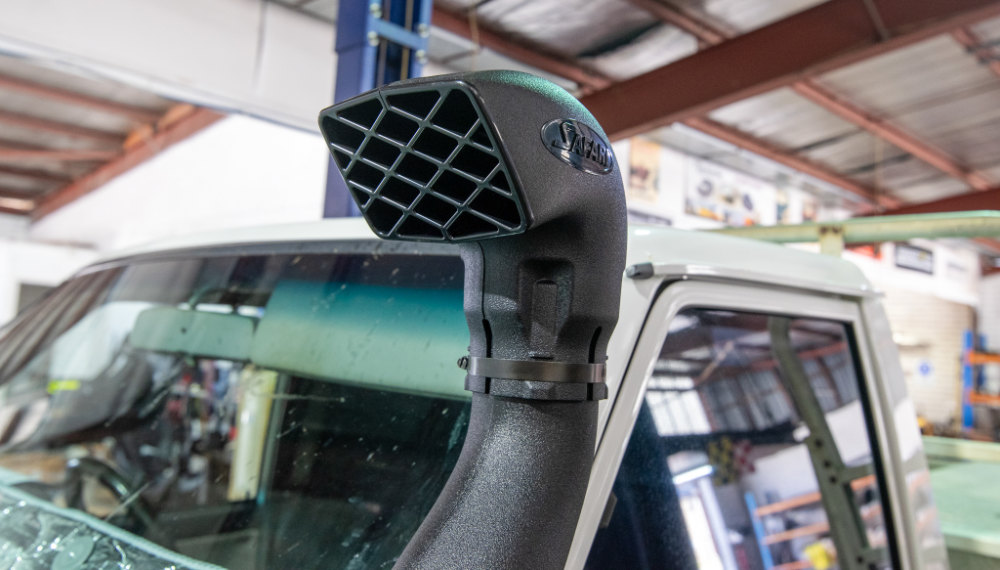
What Bull Bars and Snorkels Protect
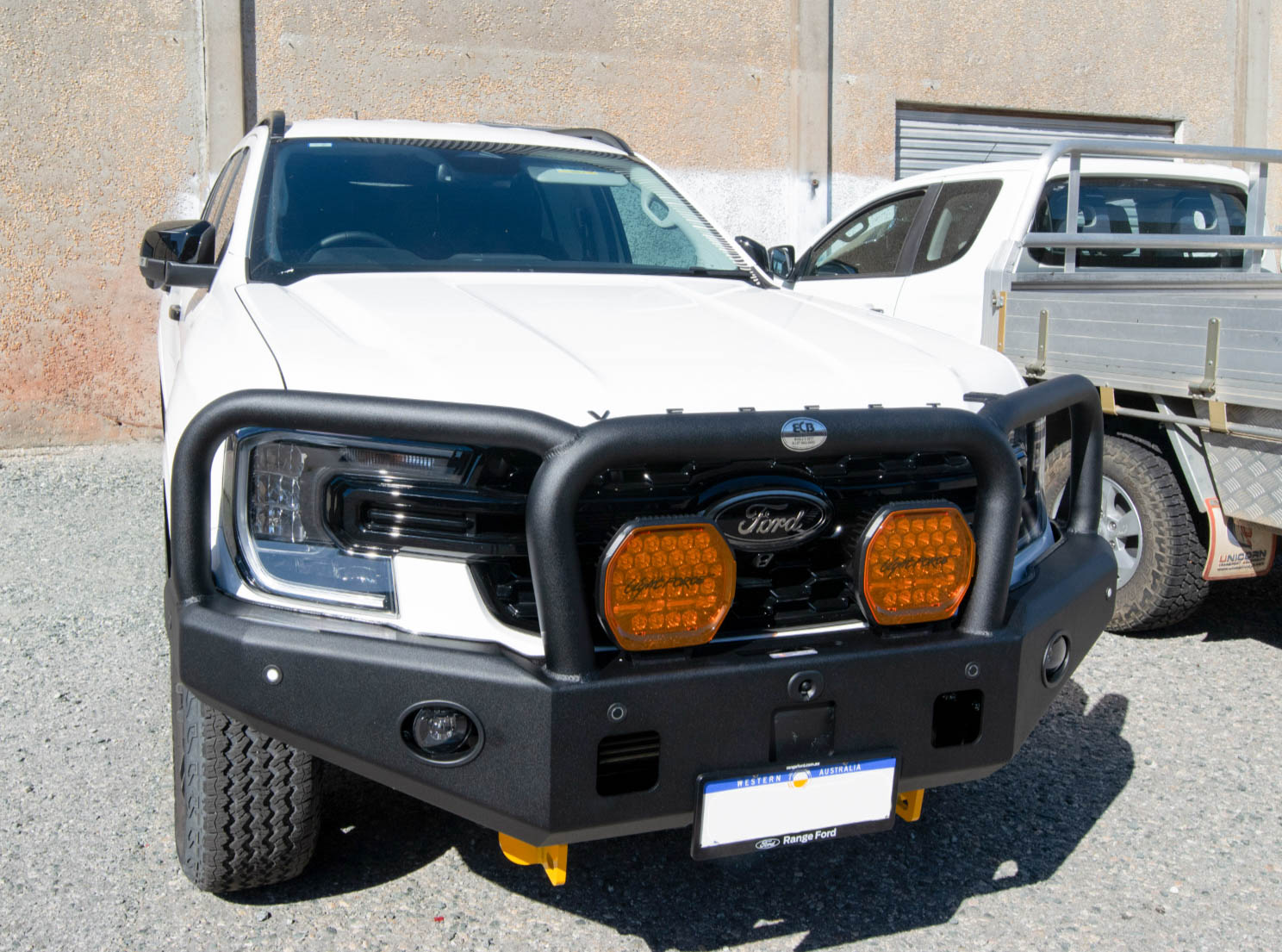
A bull bar does more than just look the part. These sturdy metal frames shield radiators, headlights, intercoolers, grille components, and front panels from impact damage. When a collision occurs, whether with an animal, a fallen branch, or an unexpected obstacle, the bull bar absorbs the hit that would otherwise destroy critical engine systems and leave you stranded. Beyond protection, they provide solid mounting points for winches, LED spotlights, UHF antennas, and recovery points. High density polyethylene bull bars offer strong impact resistance and corrosion resistance while keeping weight down compared with traditional steel options.
Snorkels solve a different problem entirely. Standard air intakes sit low under the bonnet, which is fine on sealed roads but creates serious risk when crossing rivers or pushing through deep water. A snorkel relocates that intake to roof level, eliminating hydro lock, the engine destroying scenario where water enters the cylinders and causes catastrophic failure. The air ram design also uses forward vehicle motion to push air into the engine, with built in drainage slots separating any water before it reaches the filter. There’s a secondary benefit too. Snorkels draw cleaner air from above the dust clouds kicked up by your own tires, which is worth considering on long dirt road sections.
Why They’re Essential for Australian Conditions
Australia has over 42 million kangaroos, and they account for roughly 83 percent of all animal related road accidents. Hitting one at highway speed without a bull bar means severe radiator damage, smashed headlights, and quite possibly a complete write off, hundreds of kilometers from the nearest town. A quality bull bar absorbs that impact and keeps you mobile. It’s one of those accessories that feels unnecessary right up until the moment it isn’t.
Flood prone regions and off road trails with creek crossings add another layer of risk. Without a snorkel, standard air intakes are left exposed whenever water levels rise near wheel arch height. With snorkel protection, wading depths of 500mm to 800mm become manageable rather than engine threatening.
Installation Considerations
This is one area worth spending money on professional fitting. Bull bars must comply with Australian ADR regulations covering airbag deployment, lighting, and number plates. Getting this wrong creates real safety and legal problems. Snorkel installation is vehicle specific, with designs tailored for models like the Toyota Hilux, Nissan Patrol, and Mitsubishi Triton. A professional installer like Total 4×4 ensures everything sits correctly and doesn’t interfere with sensors or airbag systems.
4. Off Road Lighting Systems
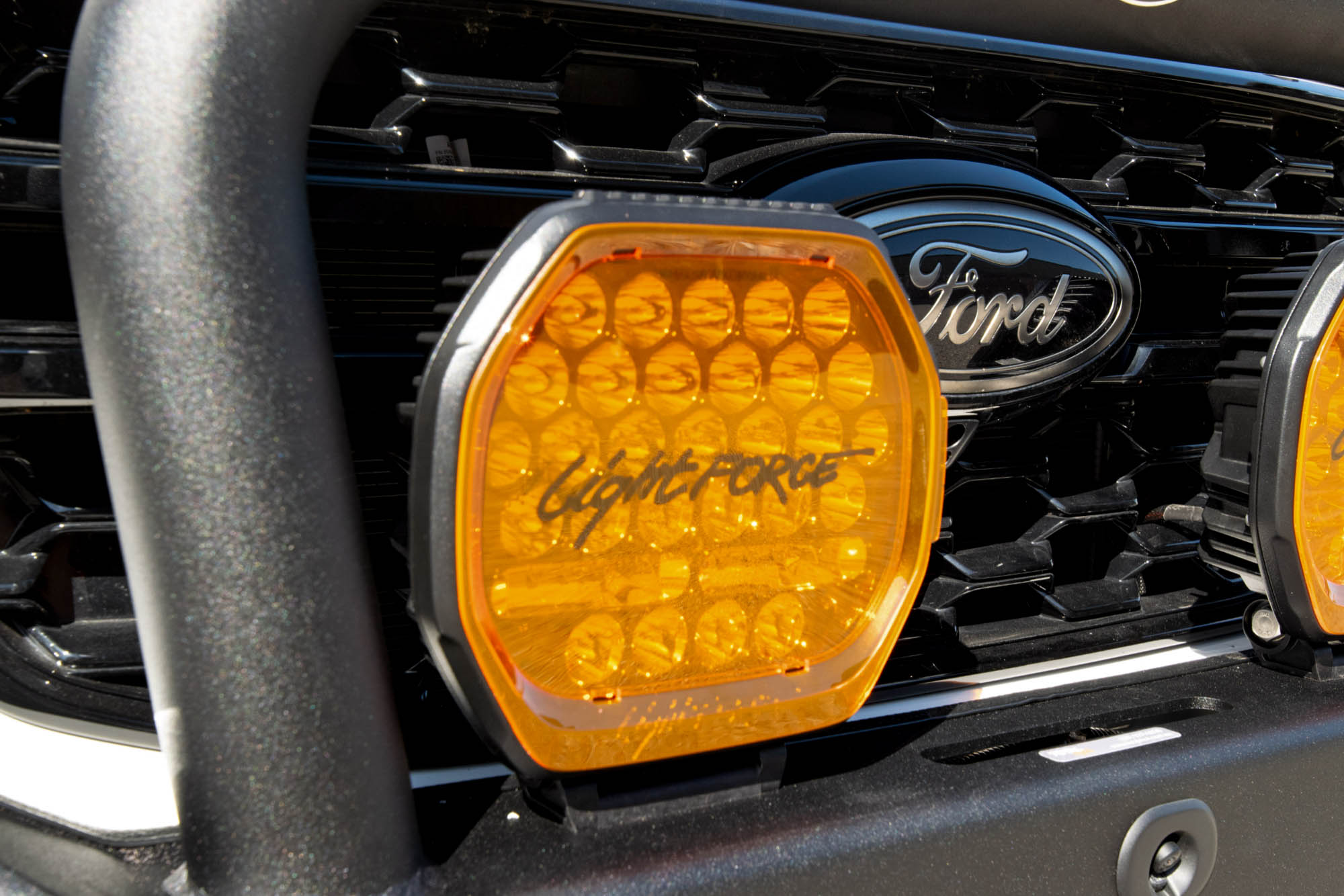
What Off Road Lighting Provides
Good off road lighting does more than just light up the road ahead. It helps you stay on established trails rather than accidentally widening them, spot obstacles before they cause damage, and give wildlife a chance to clear the path before you arrive. LED driving lights are the go to choice here. They cast long, wide beams suitable for virtually any driving condition while drawing significantly less current than older halogen alternatives. They need no warm up time, deliver strong spread both horizontally and vertically, and hold up well against the punishment of corrugated roads, creek crossings, and coastal salt air.
Why Visibility Matters After Dark
Australia is genuinely tough on lighting systems. Long night drives on unlit outback highways, extreme heat and dust, heavy rain, and coastal exposure all take their toll. One limitation worth knowing about LEDs is their lower CRI (colour rendering index) compared to halogen lights, which reduces detail visibility in darker colours like browns and reds. That matters considerably in Australia, since most wildlife involved in night time road incidents fall within exactly those colour shades. Factor in that drivers travelling at 100km/h need 42 metres just to react and hit the brakes, then another 56 metres to stop on dry surfaces, and the case for quality auxiliary lighting becomes hard to ignore.
Mounting and Wiring Tips
There are a few important rules to follow under Australian ADR regulations. Auxiliary driving lights must only operate when high beam is selected and switch off automatically when dropping to low beam. Most states permit two additional driving lights or one light bar, with acceptable mounting areas including bull bars, front bumper mounts, grille integrated positions, and roof racks. Though restrictions apply to each. Proper installation means using dedicated wiring harnesses, correct fuse ratings, relay controlled circuits, and waterproof connectors. Look for IP67 or IP69K-rated units to handle Australian climate demands properly. Always ensure lights project forward rather than upward, with hot spots aligned to the road horizon.
5. UHF Radio Communication System Or Satellite Internet
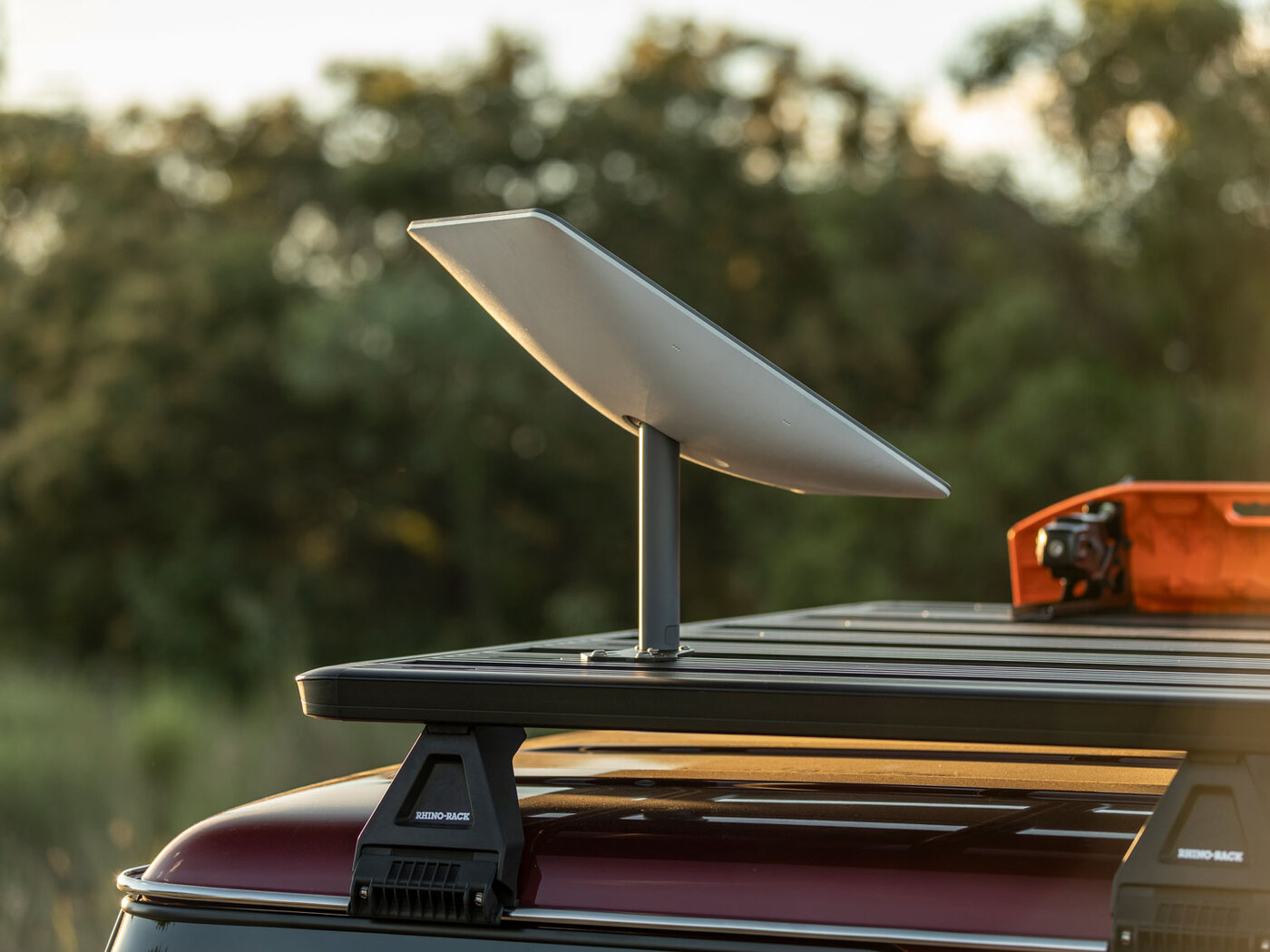
Your Lifeline Beyond Mobile Coverage
Step outside any regional town in Australia and mobile reception disappears fast. Hilly terrain, dense forests, and outback stretches swallow phone signals without warning, leaving travellers with no way to communicate when it matters most. A UHF CB radio fills that gap instantly, and for serious 4WD travel, it’s as essential as recovery gear.
UHF CB radios operate on 80 narrowband channels between 476.4250 and 477.4125 MHz, requiring no licence, no subscription, and no data connection to work. Fixed mount units wire directly to vehicle batteries and external antennas, delivering ranges between 1km and 40km depending on terrain. Handheld alternatives cover 3km to 5km in vegetated areas and up to 15km across open ground. For touring and convoy use, a fixed mount unit is the better choice, superior signal quality, clearer audio in a noisy cabin, and no batteries to go flat mid-recovery.
Modern units pack in useful features like duplex repeater capability, CTCSS/DCS privacy codes, digital signal processing, and group scan functions that let you monitor multiple channels at once. Remote head designs are worth considering too, allowing the main unit to mount discreetly behind the dash while the handset sits within easy reach.
Why UHF Radio and Satellite Internet Earn Their Place in a 4WD
The practical value of a UHF radio goes well beyond emergencies. On remote highways, it’s the primary tool for communicating with truck drivers about overtaking, oncoming traffic, roadworks, and wide loads. In convoy situations, it keeps groups coordinated. Sharing stopping points, flagging wrong turns, warning about hazards ahead, and sorting fuel stops without any reliance on phone coverage. During a recovery, a handheld unit lets a spotter guide the driver through obstacles with precision, which makes a real difference when you can’t see what’s behind or below your wheels.
The technology works in heat, dust, heavy rain, and creek crossings and conditions that would silence a phone in seconds. Satellite internet services such as Starlink add another layer of connectivity by providing internet access beyond mobile coverage where there is a clear view of the sky. That can support weather checks, route planning, messages, video calls, and access to online information from a remote campsite. It is best treated as a complement to UHF rather than a replacement: the terminal needs power, can be affected by obstructions and severe weather, and is less practical for immediate vehicle to vehicle communication on the move. For remote touring, carry the service plan and hardware suited to your travel area, protect the equipment from dust and impact, account for its power draw, and keep UHF radio and a dedicated emergency beacon available for urgent situations.
Channel Guide for Australian 4WD Travel
Getting the channels right matters. Here’s what you need to know:
- Channel 10 — the default frequency for 4WD clubs, convoys, and national parks. This is the one to monitor when travelling with others.
- Channel 40 — Australia’s designated highway channel for road safety communications. Essential on outback highways.
- Channels 5 and 35 — legislated emergency-only frequencies. Misuse carries prosecution penalties, so leave these clear.
- Channel 11 — the calling channel for locating other travellers before switching to a conversation frequency.
- Channels 22 and 23 — restricted to data transmission only.
- Channels 61-63 — reserved for future allocation, so leave these alone.
6. 4WD Recovery Kit Essentials
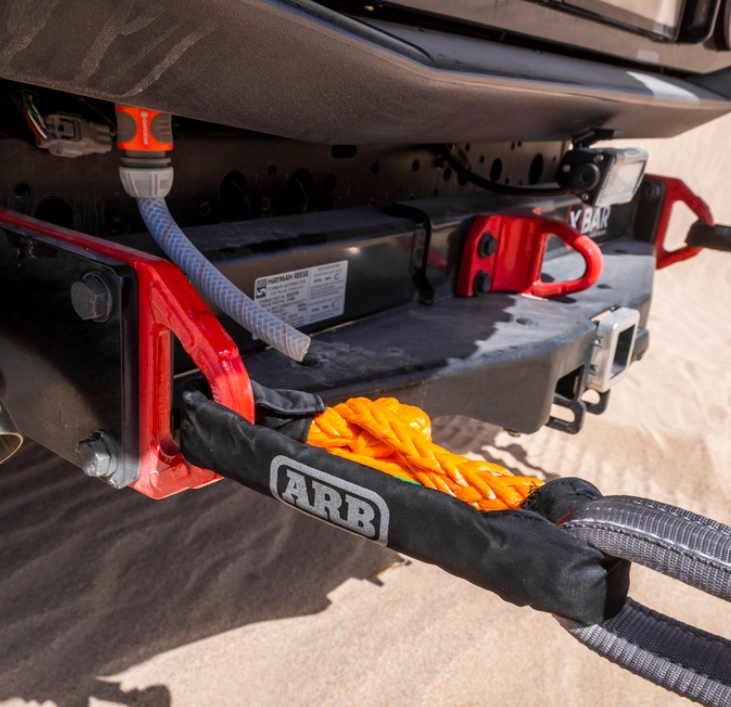
What a Recovery Kit Includes
A properly stocked recovery kit brings together several items that each serve a specific purpose when your vehicle is stuck. Core components include:
- Snatch strap with kinetic stretch capability
- Two bow shackles or soft shackles for secure connections
- Heavy duty gloves for hand protection
- Tree trunk protector for winch operations
- Recovery dampener to control failed straps
- Long handled shovel for clearing debris
- Jacking plate for soft surface stability
- Tire deflator for pressure adjustments
Premium kits take things further, swapping metal bow shackles for safer rope versions and replacing heavy snatch straps with lighter recovery ropes. Snatch blocks or recovery rings reduce winch load and allow you to change pulling direction angles. The right combination really comes down to your vehicle setup and the kind of terrain you typically tackle.
Why Every 4WD Needs One
Getting stuck happens in more ways than most people expect soft sand, muddy trails, flooded creek crossings, narrow forest routes. Recovery points on your vehicle are essentially useless without the right gear to connect them. More importantly, attempting a recovery without proper tools puts both you and your vehicle at serious risk. Out in remote areas where no assistance is coming, self recovery capability isn’t optional. It’s essential.
Snatch straps handle roughly 90 percent of off road recovery situations, using kinetic energy to extract stuck vehicles smoothly without the sudden jerk that damages both vehicles. Gloves aren’t just hand protection either. They’re invaluable when building traction by moving rocks under stuck tires. Even tire deflators pull double duty as recovery tools, with further pressure reduction often providing the extra traction needed to get moving again.
Safety Precautions When Recovering
Snatch straps need replacement after roughly 20 recoveries, or sooner if you spot fraying or torn stitching. Shackles must be rated to at least double your vehicle’s mass, no exceptions. A recovery dampener is mandatory during any winching or snatch strap operation, significantly reducing the hazard if a strap or cable lets go. Professional training is the safest way to learn proper recovery techniques. Broken shackles under load can become lethal projectiles, so this isn’t an area to learn through trial and error.
7. Roof Rack and Storage Solutions

What Roof Racks and Storage Systems Provide
Fitting a steel roof rack to your 4WD opens a whole new world of packing possibilities. Roof bars form the foundation with two or more bars mounted to existing vehicle points or using clamp-style attachments and from there, the options expand considerably. Jerry cans, LPG bottles, storage boxes, and bulky gear all find a home up top, freeing up cabin and cargo space for the things you need to access quickly.
Beyond basic bars, roof platforms create flat, stable bases popular among serious overlanders who want a dedicated mounting surface for all manner of gear. Enclosed roof boxes take things a step further, offering fully sealed storage that loads and unloads without fuss. These also provide solid mounting points for awnings and LED light bars, making them genuinely useful beyond just carrying capacity.
Why Organisation Matters on Adventures
One of the biggest frustrations with adventure vehicles isn’t capability, it’s keeping gear organized. A poorly packed 4WD means digging through everything to find the one thing you need, usually at the worst possible moment. Proper packing genuinely makes trips more enjoyable and less stressful.
Keeping oversized gear up top rather than crammed into the cabin improves driver visibility and overall safety regardless of track conditions. Heavy items that could shift and cause injury need to be secured to tie down points using cam buckle or ratchet straps and this isn’t optional. Good storage solutions keep valuable tools and equipment protected and accessible at the same time.
Load Limits and Installation
Dynamic load capacity on most roof racks sits between 50kg and 100kg, including the weight of the rack itself. Static load capacity when the vehicle is stationary can reach 300kg or more. Worth noting. Off road ratings typically drop to 50-75% of on-road capacity, so don’t load up to the maximum and expect it to hold on corrugated tracks. Keep heavier items low and centered to maintain vehicle stability. Professional installation is the way to go here and ensures compliance with your vehicle’s specifications and prevents unnecessary strain on the suspension.
8. Camping Awning for Weather Protection
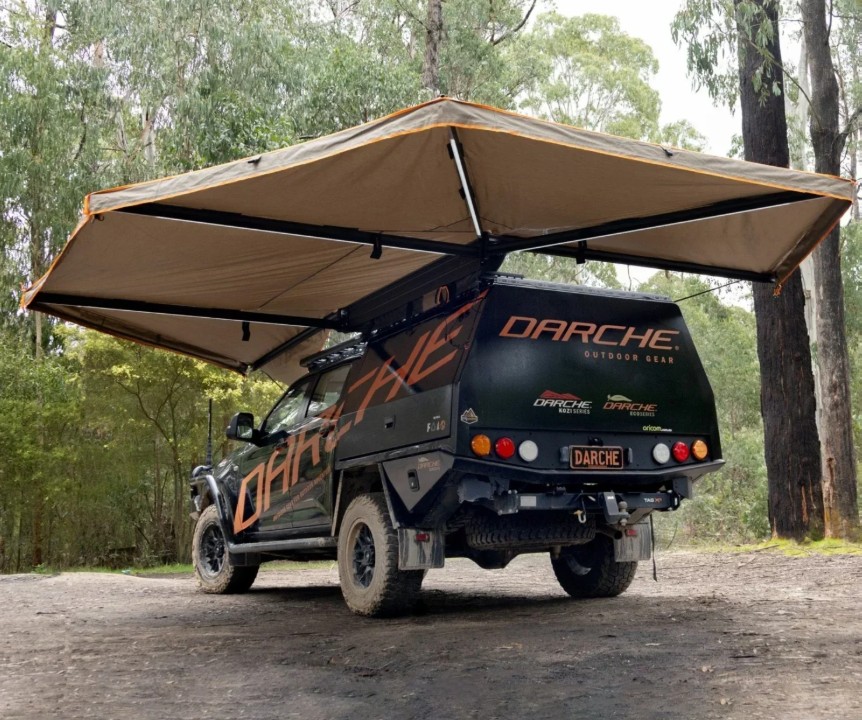
What Camping Awnings Offer
There’s nothing quite like pulling up to a campsite after a long day on the tracks and having shade sorted in seconds. Vehicle awnings attach directly to roof racks or bars, instantly extending your usable campsite space without any fuss. Side mount pull out awnings unfurl from slim aluminium cases in seconds, available in lengths from 1.0m to 3.0m to suit everything from compact SUVs through to large 4WDs. These roll out designs work just as well for a quick overnight stop as they do for a week long expedition.
For serious coverage, 270° wrap-around awnings extend around vehicle corners and create genuine outdoor living rooms with up to 13.8 square metres of protected space. These premium units feature multiple pivoting arms, integrated guy ropes, support poles, and can be set up by one person in 3-5 minutes. Quality awnings are manufactured from UV-rated, 100% waterproof material, so whether it’s blazing sun, a surprise downpour, or howling wind, you’re covered.
Why Shade and Shelter Matter
Australian summers are relentless, and anyone who has sat in full sun trying to cook lunch on a dark coloured camp table will tell you shade isn’t optional. It’s essential. Awnings transform a 4WD into a pop up paradise, creating a proper sanctuary from sunbaked surfaces and those afternoon showers that seem to appear from nowhere. Beyond keeping you comfortable, these 4WD camping accessories protect your gear, give you a dedicated cooking and relaxing area, and meaningfully extend your living space whether you’re in a remote gorge or a crowded campground.
Setup and Maintenance Tips
Most awnings can be deployed by one person in under two minutes. Well worth the small investment of roof rack space. A few practical points to keep in mind:
- Windy conditions: Tighten guy ropes and deploy support poles. Don’t skip this step.
- Water pooling: Angle the awning so water runs off the fabric rather than collecting in the centre.
- Before your first trip: Pitch the awning at home to identify any issues before you’re standing in the rain trying to figure it out.
- Cleaning: Soapy water and a soft brush do the job. Let it dry naturally before packing away.
9. Portable Fridge for Fresh Food Storage
What Portable Fridges Provide
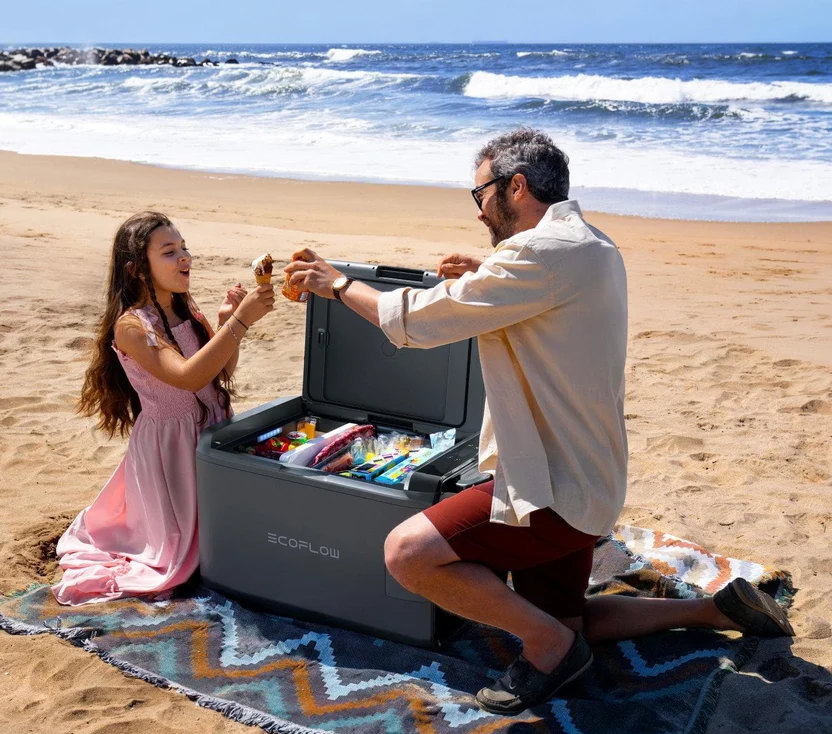
Forget bags of ice and soggy sandwiches. A portable 12V car fridge uses a real compressor, the same technology as your fridge at home to keep food genuinely cold regardless of how hot it gets outside. These units run on 12V, 24V, and 240V power, and come in capacities ranging from 15L right through to 130L, so there’s a size to suit everything from a solo day tripper to a fully loaded family expedition rig.
Thermo electric coolers only manage a set number of degrees below the ambient temperature, which means on a hot Australian day they often fall short of keeping food safe. Compressor models maintain precise temperatures and can even freeze contents, making them a far superior option for serious adventurers.
Dual zone fridge freezers split into two separate compartments, letting you chill drinks while keeping meat frozen at the same time. Ideal for longer trips where variety matters. Single zone units work well for shorter getaways and can switch between fridge and freezer modes as needed.
Why Fresh Food Enhances Adventures
There’s a real difference between a camping meal built around fresh meat and vegetables versus tinned goods and dehydrated packets. A quality portable fridge makes that difference possible, even weeks into a remote trip.
Power Management and Cooling Tips
Most portable fridges draw between 1 and 6 amps per hour while running, with 2.5 amps being a reasonable average to plan around. Compressors typically run about half the time, which works out to roughly 30 amp hours per day. Worth factoring into your dual battery and solar setup before heading out.
A few simple habits make a real difference to efficiency. Precool your fridge at home on 240V before the trip, so the compressor isn’t working overtime from the start. A full fridge stays colder for longer, so pack spare space with chilled water bottles. Proper airflow around the compressor matters too, and an insulated cover helps maintain performance while reducing how hard the unit has to work.
10. Drawer System for Organized Gear

What Drawer Systems Offer
Once you have recovery gear, a fridge, and camping kit sorted, the next challenge is keeping all of it accessible and secure while you’re bouncing down corrugated tracks. Modular 4WD drawer systems solve this problem by turning cargo areas into properly organised storage, with sliding drawers mounted on smooth gliding runners. These units arrive 95% pre-assembled with durable steel frames that protect gear while making the most of available space.
Why Organisation Improves Camping
Loose gear sliding around in the back of a 4WD is more than just annoying. It can damage equipment and create genuine safety hazards on rough terrain. Drawer systems keep everything in its place, reducing clutter and the likelihood of something important getting buried or broken. Lock in and lock out functionality means drawers stay shut on steep slopes or rough descents, which is exactly when you don’t want them flying open.
Packing Strategy for Maximum Efficiency
The simplest approach is grouping gear by function. Keep cooking equipment in one drawer, recovery tools in another, and put the things you reach for most often closest to the drawer opening. Dividers or foam inserts protect fragile items and stop everything shifting around mid track.
Conclusion
All things considered, investing in quality 4wd accessories australia adventurers trust transforms any vehicle into a capable expedition platform. These ten essentials work together rather than individually, creating comprehensive safety and comfort systems for remote travel. Recovery tracks prove useless without proper communication tools, while portable fridges enhance experiences that lighting and awnings make possible.
Especially for those new to off road travel, starting with recovery equipment and communication systems establishes a solid foundation. Experienced adventurers can then add comfort accessories like drawer systems and awnings. Proper equipment separates successful Australian adventures from disappointing ones, particularly when venturing beyond mobile coverage into genuine wilderness.
Key Takeaways
These ten accessories don’t work in isolation, they function as a system. Piece them together properly and you’ve got a vehicle genuinely ready for remote Australia. Here’s what to keep in mind:
- Recovery tracks and communication systems are your safety foundation. Self extraction from sand or mud, combined with reliable radio contact where mobile coverage disappears, gives you the confidence to venture further.
- Tire pressure management makes a real difference off road. A portable compressor lets you drop pressures for the terrain and reinflate quickly when you hit the bitumen, that adjustment delivers 32% extra grip and a 42% reduction in ground pressure on soft surfaces.
- Bull bars and snorkels address Australia’s specific hazards. With over 42 million kangaroos on the continent and flood-prone tracks throughout the country, engine protection and wildlife collision coverage aren’t optional extras.
- Proper lighting matters more than most people realise. Travelling at 100km/h needs 98 metres of total stopping distance on dry road. That’s before accounting for poor visibility in dust, rain, or darkness.
- Organised storage turns a capable 4WD into a proper expedition vehicle. Roof racks, drawer systems, and portable fridges working together mean less chaos, better weight distribution, and genuinely comfortable time spent remote.
The smartest approach is to build your kit in stages. Start with recovery equipment and a UHF radio or satellite internet as these cover the situations that actually put you at risk. Comfort gear like awnings, fridges, and drawer systems can follow as your off road experience grows.
FAQs
Q1. What are the most essential 4WD accessories for beginners on a budget?
Start with quality tires, as they make the biggest difference in off road capability. Follow up with a portable 12V air compressor for adjusting tire pressures, a UHF radio for communication, and basic recovery gear including a snatch strap and rated shackles. These fundamentals will get you safely exploring without breaking the bank.
Q2. Do I really need recovery tracks, or can I use alternatives?
Recovery tracks are highly recommended as they provide superior traction, flotation, and clearance when stuck in sand or mud. While some people use carpet or wood as budget alternatives, purpose built recovery tracks like MAXTRAX or TRED are specifically engineered to withstand vehicle weight, won’t slip under tires, and work reliably across multiple terrain types.
Q3. How important is a UHF radio for 4WD adventures in Australia?
A UHF radio is critical for Australian off road travel. Mobile phone reception disappears quickly outside regional towns, making UHF your primary communication tool for convoy coordination, communicating with truck drivers on highways, warning others about hazards, and calling for help in emergencies. Channel 10 is the standard frequency for 4WD groups.
Q4. What should I prioritise first: bull bar or suspension lift?
This depends on your specific needs and driving conditions. If you frequently encounter wildlife (particularly kangaroos) or need mounting points for a winch and lights, prioritize a bull bar. If you’re tackling rough terrain and need better clearance, start with a modest 2-inch lift and quality tires. Many experienced adventurers recommend tires and suspension before cosmetic additions.
Q5. How do I choose the right portable fridge size for camping trips?
Consider trip duration and group size when selecting fridge capacity. A 40-50L fridge suits weekend trips for 2-3 people, while 60-85L models work better for extended adventures or families. Dual zone fridge freezers offer the most versatility, allowing you to keep items frozen while chilling drinks and fresh food simultaneously. Remember that fridges consume approximately 30 amp hours daily, so factor in your power setup.